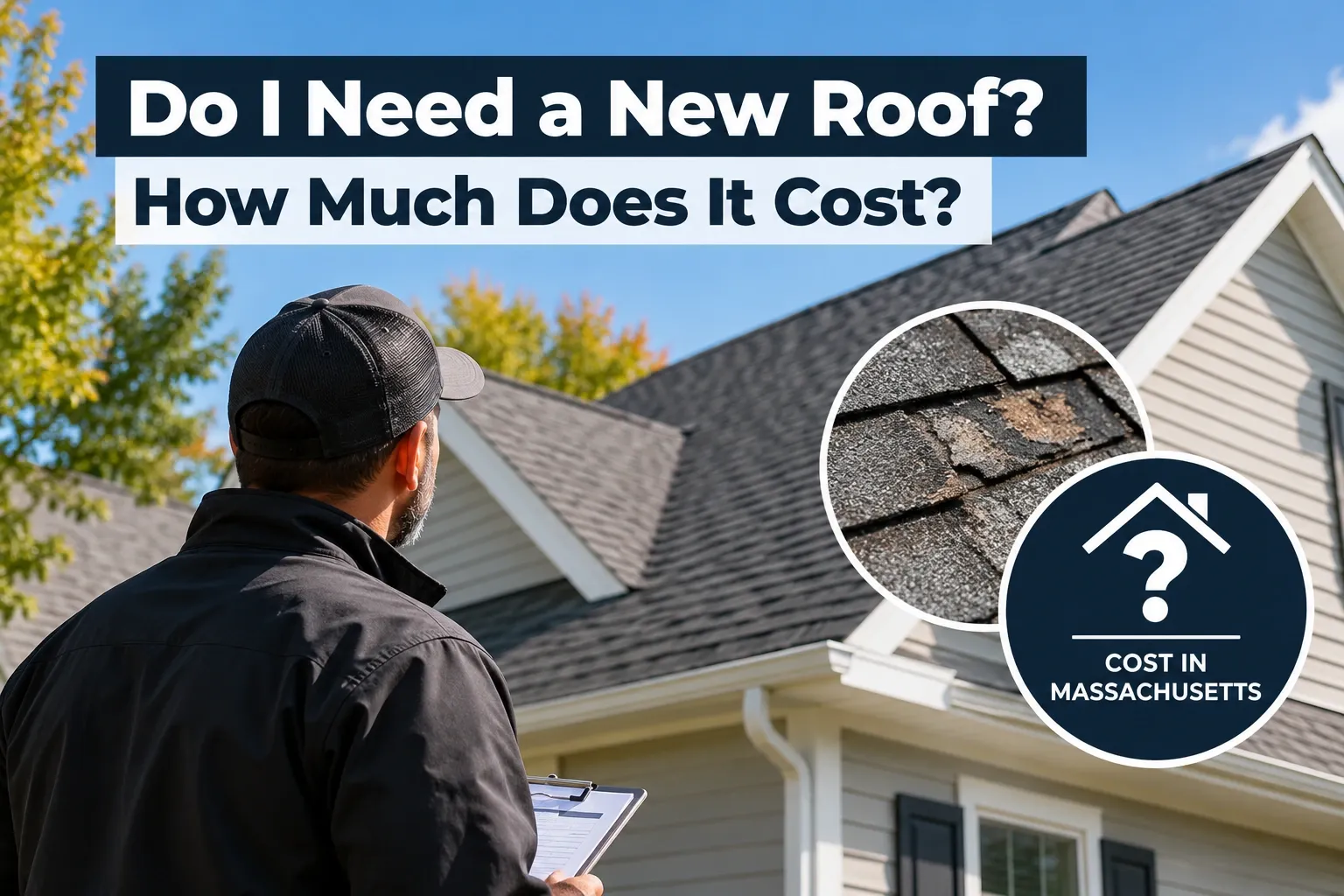
You’ve got a stain spreading across the ceiling, a handful of missing shingles after last week’s wind, and a decision to make before the next storm rolls through. In most cases, a roof needs repair if the damage is isolated and the roof is under 15 years old, and it needs full replacement if the damage is widespread, the roof is past two-thirds of its expected lifespan, or repairs keep recurring in different spots.
How old is your roof right now
Age is often the single best predictor of whether repair makes sense. Most asphalt shingle roofs in Massachusetts last between 20 and 25 years, depending on installation quality, attic ventilation, and how much sun and ice the roof has taken over the years.
- Under 10 years old: Isolated damage is almost always worth repairing.
- 10 to 15 years old: Repair is still reasonable, but start budgeting for eventual replacement.
- 15 to 20 years old: Repairs become harder to justify if more than one area is failing.
- 20+ years old: Replacement is usually the more cost-effective long-term choice.
If you’re not sure how old your roof is, check your home’s inspection report from when you bought the property, or look for a permit record with the town.
Signs that point to a repair instead of a full roof
Not every leak or missing shingle means you need a new roof. Repair is typically the right call when the problem is contained and the rest of the roof shows no signs of wear.
- A small cluster of shingles lifted or blown off after a storm
- A single leak traced to flashing around a chimney, vent, or skylight
- Minor granule loss in one section while the rest of the roof looks intact
- Damage limited to one slope, especially if it faces prevailing winds
These issues are usually quick to address and don’t require touching the rest of the roof system.
Signs that point toward a full roof replacement
When damage shows up in multiple places or keeps coming back, that’s usually the roof telling you it’s done protecting your home the way it should.
- Shingles curling, cracking, or losing granules across most of the roof
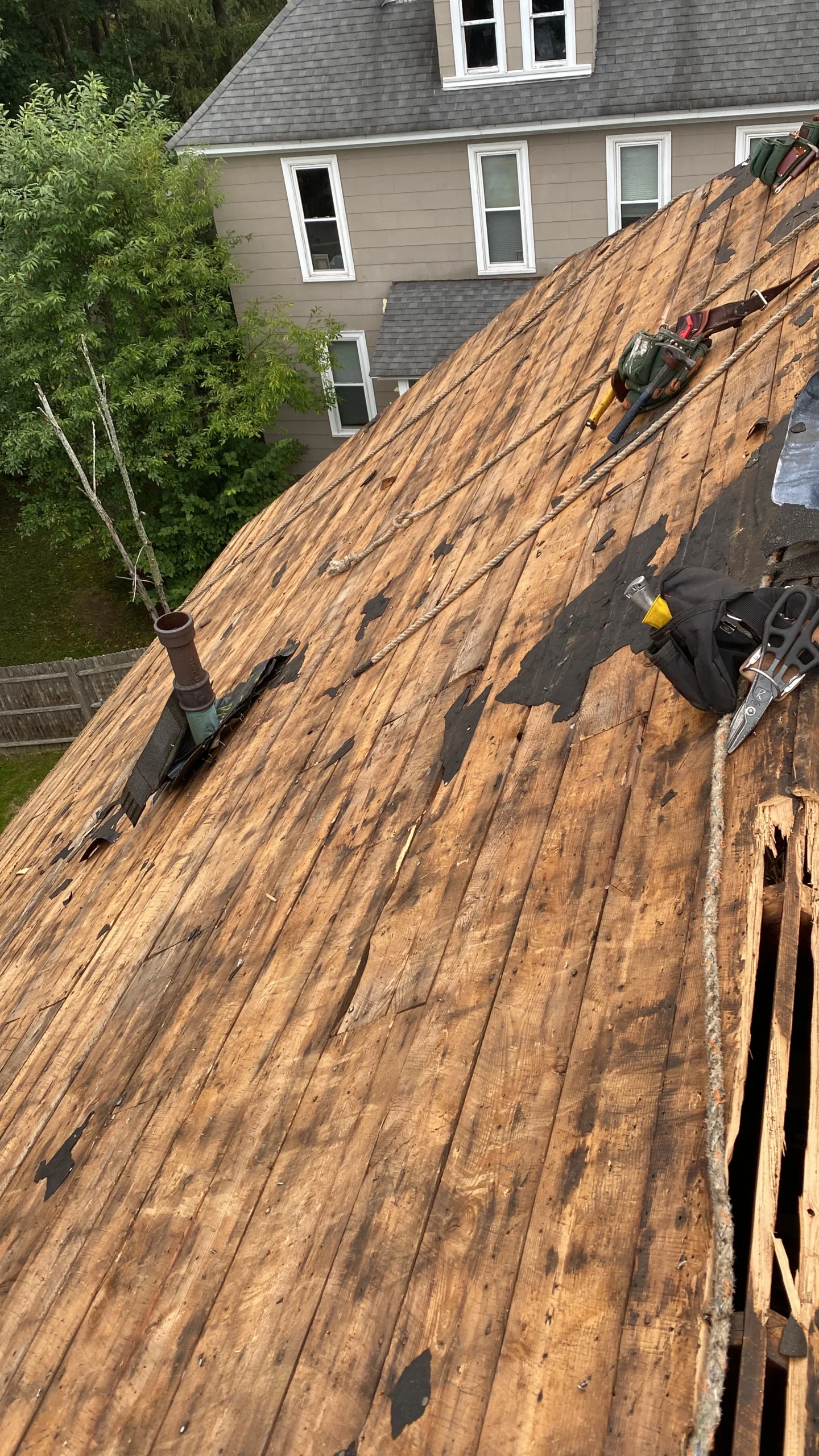
- Daylight visible through the roof deck from inside the attic
- Soft spots or sagging anywhere on the roof surface
- Repeated leaks in different locations over the past year or two
- Previous repairs that no longer hold up through winter
If two or more of these apply, a full roof replacement is typically the more practical path, both for your home’s protection and your long-term budget.
What recurring leaks really mean
A leak that reappears after being patched is rarely about the patch itself. It’s more often a sign that the underlying roofing material has reached the end of its service life and can no longer shed water reliably, even when individual problem spots get fixed.
How Massachusetts weather changes the repair-or-replace equation
New England winters put a specific kind of stress on roofs that homeowners in milder climates don’t deal with. Ice dams form when melting snow refreezes at the roof’s edge, forcing water backward under shingles. Repeated freeze-thaw cycles widen small cracks into bigger ones, and heavy, wet snow adds weight that older roof decks weren’t built to carry long-term.
- Ice dam damage: Often repairable if caught early, but repeated ice dams over several winters usually point to ventilation or insulation problems that a replacement can correct.
- Wind-driven rain: Coastal and elevated properties see more flashing and seal failures, which are frequently repairable if the shingles themselves are still in good shape.
- UV and temperature swings: Massachusetts summers bake shingles while winters freeze them, accelerating wear faster than in more stable climates.
These local conditions are exactly why a roof that looks fine from the ground can still need closer attention before the next season hits.
Why a professional roof inspection settles the question
Most homeowners can’t tell from the driveway whether their roof needs a patch or a full tear-off. A trained eye can spot the difference between surface wear and structural failure in the time it takes to walk the roof and check the attic.
A professional roof inspection typically covers:
- Shingle condition across every slope, not just the visible side
- Flashing around chimneys, vents, and skylights
- Attic ventilation and signs of moisture or mold
- Roof deck integrity and any soft or sagging areas
- Gutter and drainage performance during heavy rain or snowmelt
This gives you a documented, specific answer instead of a guess, which matters whether you’re planning to stay in the home for years or preparing to sell.
Comparing the real costs of repair versus replacement
Repairs cost less upfront, but that math only holds up if the repairs actually solve the problem. A string of small repairs on an aging roof can add up to more than a replacement would have cost, especially once you factor in interior damage from leaks that went unnoticed between repair visits.
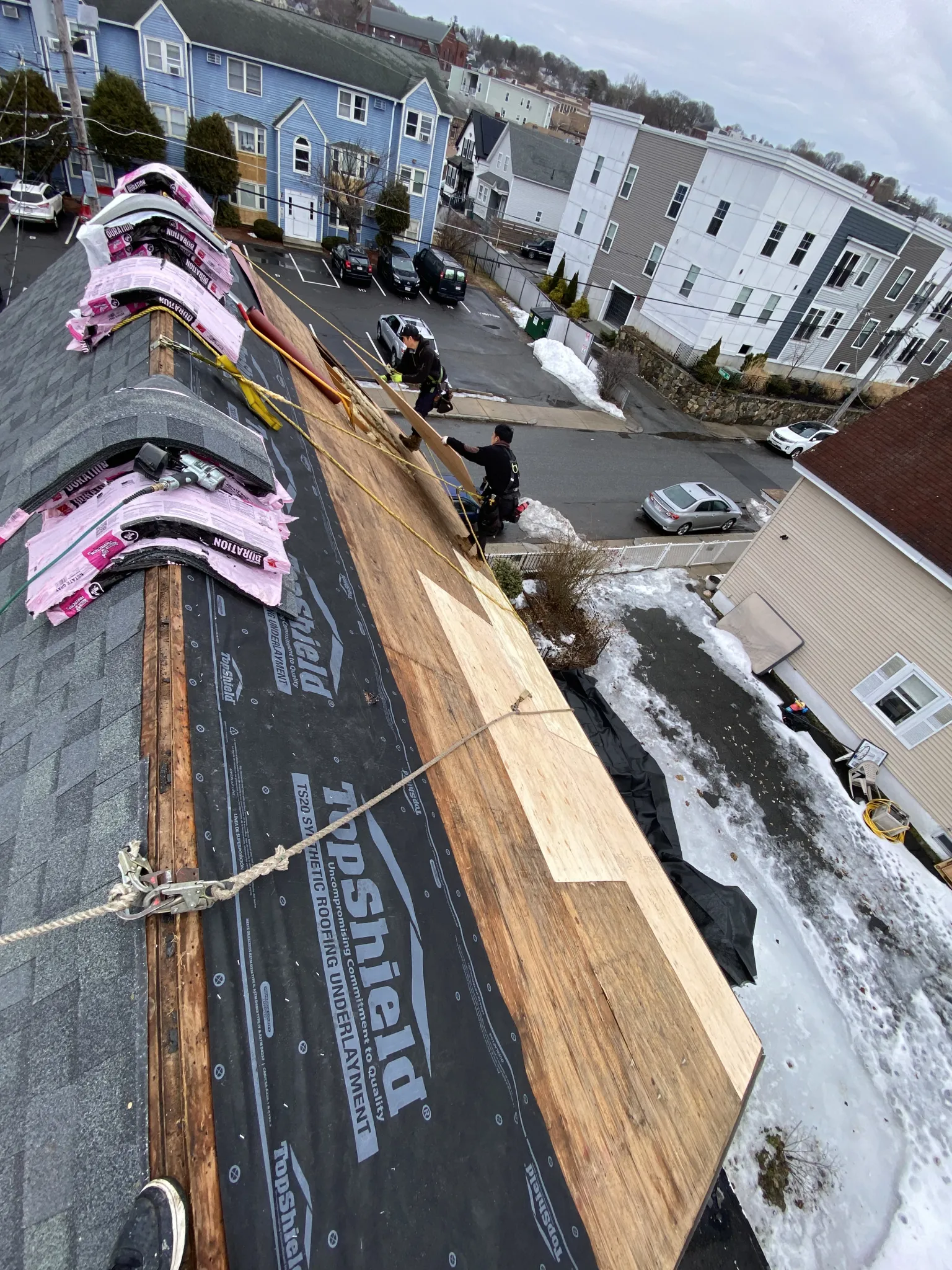
Replacement costs more at once but resets the clock entirely: new materials, consistent coverage across the whole roof, and no patchwork of different repair dates aging at different rates. If you’re trying to estimate what a replacement might run for your home, our guide on how much a new roof costs in Massachusetts breaks down the factors that affect pricing.
When replacement protects your home’s value better
If you’re planning to sell within the next few years, a roof nearing the end of its life can become a negotiating point for buyers regardless of whether it’s currently leaking. A documented replacement removes that question entirely and can make the home easier to list with confidence.
Choosing the right path for your roof’s condition
The most useful rule of thumb is this: if the damage is contained, your roof is under 15 years old, and an inspection confirms the rest of the structure is sound, repair is the smarter move. If the damage is spread out, the roof is older, or repairs keep recurring, replacement will serve your home better over the long run.
EKD Construction LLC has spent over 10 years helping Massachusetts homeowners make this exact call, combining careful inspection with honest recommendations rather than pushing one option over the other. If you’re unsure which side of that line your roof falls on, contact EKD Construction LLC to schedule a roof inspection and get a clear, straightforward recommendation.