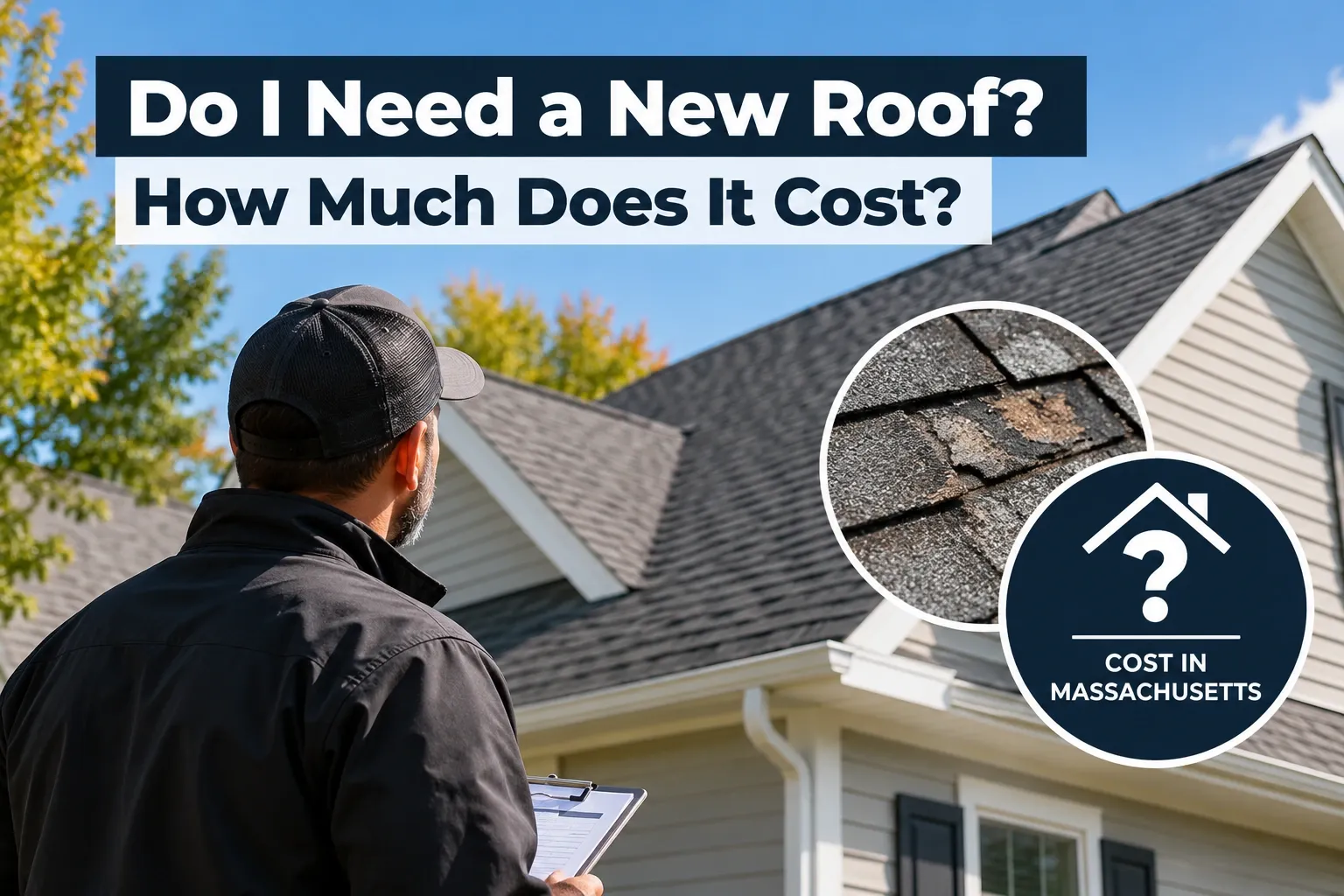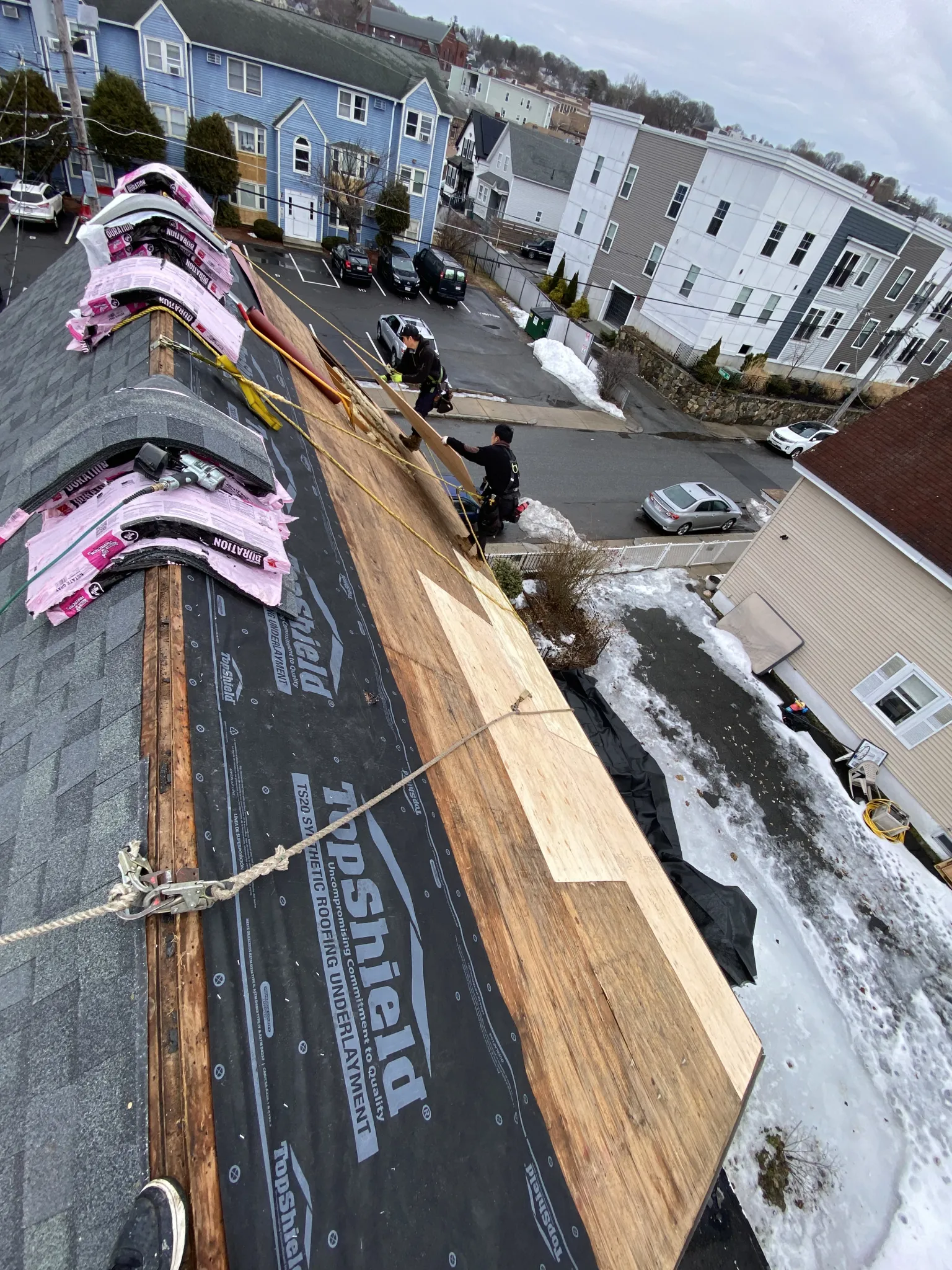
A sudden stain spreading across your ceiling after a nor’easter rolls through is one of the most stressful moments of homeownership, especially when you’re not sure if it’s a minor drip or the start of serious water damage. If you discover a roof leak after a storm, the first priority is to protect the interior of your home from further damage, then document the issue and schedule a professional roof inspection as soon as possible to determine the cause and the right fix.
Act quickly once you spot water inside your home
The minutes right after you notice a leak matter more than most homeowners realize. Standing water or a saturated ceiling can lead to sagging drywall, electrical hazards, and mold growth within 24 to 48 hours. Massachusetts storms often bring heavy rain combined with high wind, which can drive water under shingles and flashing in ways that aren’t always obvious from inside the house.
Move quickly but safely
- Turn off electricity to the affected room if water is near outlets, fixtures, or wiring.
- Place a bucket or container under the drip and check it frequently so it doesn’t overflow.
- Use a small nail or screwdriver to poke a controlled hole in a sagging ceiling bulge, which relieves pressure and prevents a larger, uncontrolled collapse.
Protect your belongings while water is still active
Once the immediate leak is contained, shift your focus to limiting damage to the room and its contents. This is especially important during multi-day storm systems when the roof may continue taking on water for hours.
Contain and cover
Lay down towels or a tarp to catch water that might spread beyond your bucket. If the leak is near a window or exterior wall, check for water pooling along baseboards, which can indicate the leak is traveling further than it first appears.
Move items out of harm’s way
Relocate furniture, electronics, and anything stored in an attic space below the leak point. Wood furniture and upholstery that sit in water for more than a few hours are far more likely to need professional drying or replacement.
Document everything before cleanup begins
Take photos and short videos of the ceiling stain, any dripping water, and visible damage to flooring or furniture. These records are useful for both your contractor’s assessment and any insurance claim you may file.
What typically causes storm-related roof leaks in Massachusetts
Massachusetts roofs deal with a wide range of conditions throughout the year, from summer thunderstorms with heavy downpours to winter nor’easters with wind-driven snow and ice. Each type of storm tends to expose different weak points in a roofing system.
- Wind-lifted or missing shingles: High gusts can loosen shingle edges or tear them off completely, exposing the underlayment to direct rain.
- Damaged or separated flashing: Flashing around chimneys, skylights, and roof valleys is a common entry point once it pulls away from the surface.
- Ice dam backup: In winter, melting snow can refreeze at the roof edge, forcing water back under shingles instead of draining off.
- Clogged or damaged gutters: Overflowing gutters push water toward the fascia and roof edge rather than away from the house.
- Aging roofing materials: A roof nearing the end of its lifespan is far more likely to fail under storm stress than one in good condition.
Deciding between a repair and a full roof replacement
Not every storm leak means you need a new roof, but some do point toward a bigger underlying problem. A few factors typically guide this decision:
- Age of the roof: If your asphalt shingle roof is approaching 20 years or more, storm damage may be the tipping point rather than an isolated issue.
- Extent of the damage: A single area of lifted shingles or damaged flashing is often repairable, while widespread granule loss or multiple leak points suggest broader wear.
- Frequency of leaks: If this isn’t your first storm-related leak in the past year or two, repeated patching may cost more over time than addressing the whole roof.
A licensed contractor can give you a clear answer after examining the roof up close. For a closer look at how these numbers typically break down, our related guide on how much a new roof costs in Massachusetts walks through the main cost factors homeowners should expect.
What a professional inspection looks for after a storm
A thorough roof inspection goes well beyond a quick look from the ground. A qualified inspector will typically check:
- Shingle condition, including cracking, curling, or granule loss
- Flashing around chimneys, vents, and skylights
- Attic space for signs of moisture, staining, or insulation damage
- Gutter and downspout function
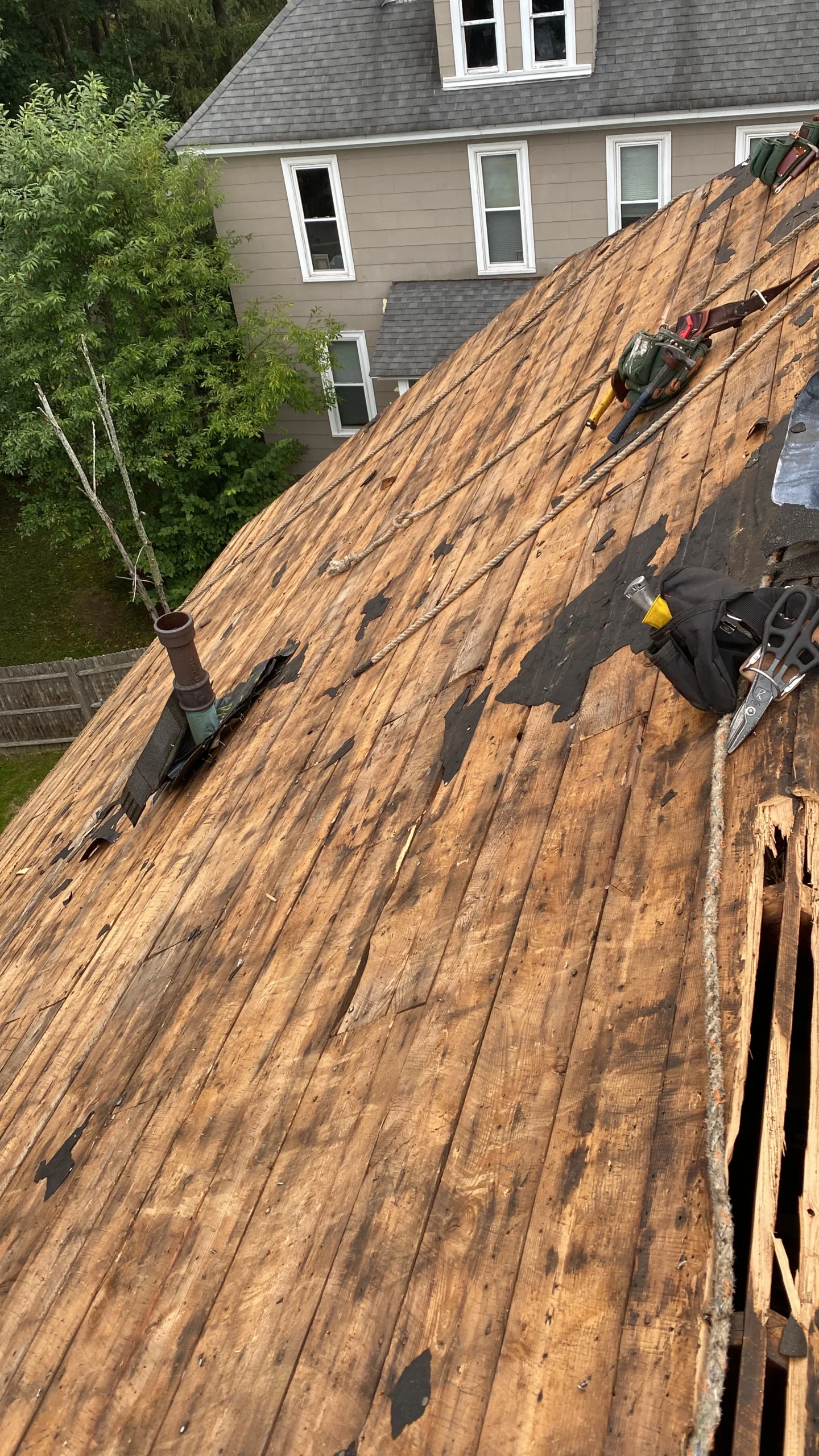
- Decking condition beneath the roofing material, where visible
This kind of inspection gives you a documented record of the damage, which is useful whether you’re planning a repair, a full roof replacement, or working through an insurance claim.
Understanding the cost range for storm-related roof repairs
Costs vary widely depending on the extent of the damage, the roofing material, and the accessibility of the affected area. A localized repair involving a section of shingles and flashing is generally far less expensive than a full tear-off and replacement. Larger storms that cause widespread shingle loss, structural decking damage, or repeated leaks across multiple areas of the roof push costs higher and may make replacement the more practical long-term choice. Getting a written estimate after an inspection is the only reliable way to know where your specific situation falls, since quotes over the phone without seeing the roof rarely reflect the real scope of work.
When it makes sense to involve your insurance company
Homeowners insurance often covers sudden storm damage, such as a tree limb striking the roof or wind tearing off shingles, but coverage details vary by policy and insurer. If you suspect the damage qualifies, document the leak and any visible exterior damage before cleanup, then contact your insurance company to understand your next steps. A contractor’s written inspection report can support your claim, but the insurance company will typically also want to send its own adjuster to confirm the damage.
Get your roof back to full protection before the next storm hits
The most important step after any storm leak is getting a clear, honest assessment of what’s actually happening with your roof, rather than guessing based on a single stain or drip. EKD Construction LLC is a licensed and insured team with more than 10 years of experience helping Massachusetts homeowners handle exactly this kind of situation, from roof inspections and targeted repairs to full roof replacements when a roof has reached the end of its useful life.
If you’re dealing with a leak right now or want a professional look at your roof before the next round of Massachusetts weather arrives, contact EKD Construction LLC to schedule a roof inspection or repair estimate.